
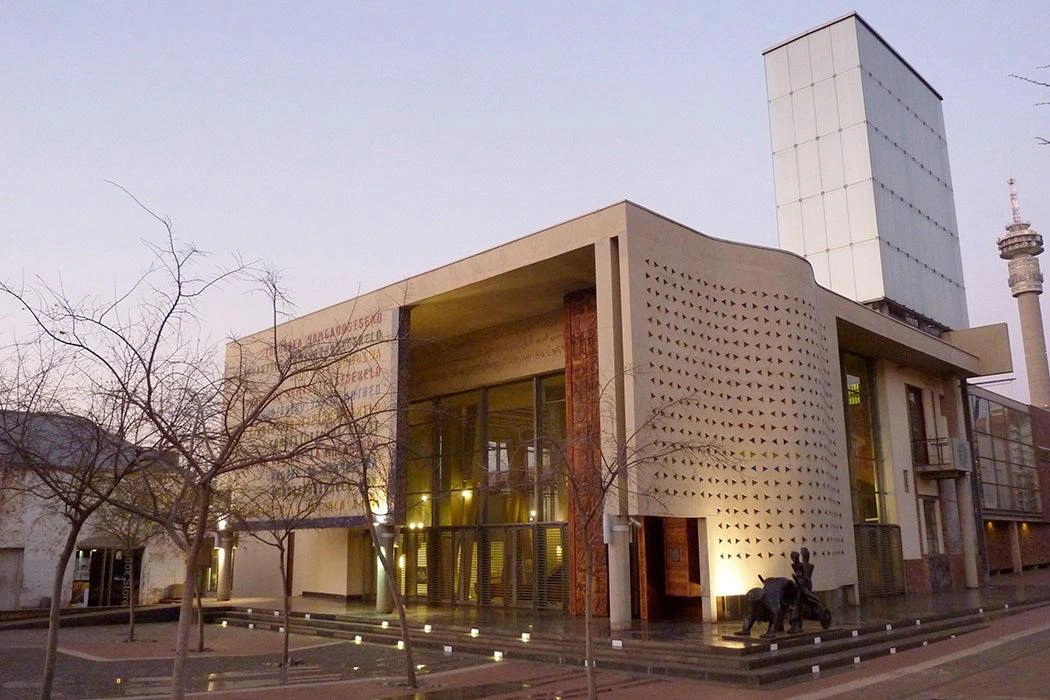
The Constitutional Court, Johannesburg. Every court in the country sits under the same Constitution.
A “single judiciary” is not a slogan about closing Magistrates’ Courts. Those courts are listed in section 166 of the Constitution alongside the Constitutional Court, the SCA and the High Court. They are courts. Full stop.
What we are asking for is simpler than it sounds. The woman or man who hears a regional-court trial should be appointed, supported, paid and, when necessary, disciplined as a judicial officer of one institution — not as a departmental afterthought.
Judges are appointed with the Judicial Service Commission. Magistrates are appointed by the Minister after consulting the Magistrates’ Commission, under the Magistrates Act 90 of 1993. Judges have the Judges’ Remuneration and Conditions of Employment Act 47 of 2001. Magistrates live under ordinary legislation that Parliament can change without a two-thirds majority. That is the fork in the road.
In July the Judiciary Conference in Umhlanga put it on a banner: “Towards a single, institutionally independent, and accountable judiciary.” JASA has been carrying that sentence from court steps to radio studios. The next test is Phase 2 of the transfer to the Office of the Chief Justice. If the new law builds a stronger house for judges and leaves magistrates outside, we will say so, with the section numbers attached.
In one sentence
A single judiciary does not flatten the appeal ladder. It ends the habit of treating the court that serves most South Africans as a junior service.
A Monday that never makes the news
Call her Magistrate M. She is not one person. She is a composite of rolls JASA keeps hearing about. At 08:40 the recording machine in Court 3 is dead. At 09:10 a protection-order applicant has taken two taxis and a child. At 11:00 a regional-court trial part-heard since February is back, with a witness who has already cried in the passage. At 13:30 there is no lunch, only a banana and a reserved judgment that is two weeks late because last Thursday was four new first appearances. At 16:10 she drives home and tries not to take the children’s-court voice with her.
That Monday is the single-judiciary argument in human form. Independence is not only a section number. It is whether Magistrate M can still hear Friday without becoming someone her family no longer recognises.