











THE BENCH
Official Newsletter of the Judicial Officers Alliance of South Africa
Seventh Edition · October 2026
A Message of Pride, Progress and Purpose
From the Office of the President, Mr Neelan Karikan
Justice, the Constitution and the nation we serve.
It is with profound pride and a deep sense of responsibility that I present the Seventh Edition of The Bench, the official newsletter of the Judicial Officers Alliance of South Africa. October 2026 has been a month of historic significance for our nation and for the judiciary we serve. A daughter of Durban has been recognised by the world. New judicial officers have taken their oaths. The Madlanga Commission continues its vital work of restoring public confidence in the criminal justice system. And across our courts, magistrates continue the daily, often unsung, labour of delivering justice with integrity. This edition is dedicated to celebrating excellence, strengthening the rule of law, and equipping judicial officers with clear, practical guidance on the issues that most affect the people who appear before us. Every article has been written with the precision and care expected of senior counsel, grounded firmly in South African law, and offered in the spirit of professional solidarity.
Judicial Officers Alliance of South Africa · Upholding Justice, Promoting Equity, Fostering Unity Page 1
THE BENCH
Official Newsletter of the Judicial Officers Alliance of South Africa
Seventh Edition · October 2026
From Clairwood to the Nobel Peace Prize
Honouring Judge Navanethem “Navi” Pillay – A Daughter of Durban
Judge Navi Pillay, 2026 Nobel Peace Prize Laureate. Photo: Wall Street Journal / file.
On 9 October 2026, the Norwegian Nobel Committee announced that the Peace Prize had been awarded to Navanethem “Navi” Pillay “for her efforts to promote peace and international law.” In so doing, the Committee recognised a lifetime of work that began in the streets and courtrooms of Durban and has shaped the architecture of international criminal justice for more than half a century.
Born on 23 September 1941 in Clairwood, Durban, to a Tamil Indian family of modest means, Pillay’s path was never ordinary. Her father was a bus driver. Her community raised funds so that she could study. She graduated from the University of Natal with a BA in 1963 and an LLB in 1965. In 1967 she became the first woman – and the first non-white woman – to establish her own law practice in Natal. Under apartheid’s rigid racial and gender barriers, she defended political detainees, including those held on Robben Island. In 1973 she secured a landmark ruling that granted prisoners, among them Nelson Mandela, the right to legal representation and access to law books. After the democratic transition, she became the first non-white woman appointed to the High Court of South Africa. In 1995 the United Nations General Assembly elected her a judge of the International Criminal Tribunal for Rwanda. She served as its President from 1999 to 2003. Under her leadership the Tribunal developed the now-settled jurisprudence that rape and sexual violence can constitute acts of genocide and crimes against humanity. She later served as a judge of the International Criminal Court and, from 2008 to 2014, as United Nations High Commissioner for Human Rights. She has continued to serve as an ad hoc judge of the International Court of Justice and chaired
Judicial Officers Alliance of South Africa · Upholding Justice, Promoting Equity, Fostering Unity Page 2
THE BENCH
Official Newsletter of the Judicial Officers Alliance of South Africa
Seventh Edition · October 2026
the UN Independent International Commission of Inquiry on the Occupied Palestinian Territory. The Nobel Committee’s citation emphasises her “judicial rigour, personal integrity and considerable courage” at a time when international legal institutions face political pressure. For South African judicial officers, her life is both inspiration and instruction. She demonstrated that rigorous application of law, combined with moral clarity, can advance peace even in the most hostile environments. Her journey from Clairwood to Oslo affirms that excellence is not the preserve of any particular background; it is cultivated through discipline, courage and fidelity to principle.
A Special Message from the President of JASA
“On behalf of every member of the Judicial Officers Alliance of South Africa, I extend our warmest congratulations to Judge Navi Pillay. As a son of KwaZulu-Natal and as President of this Alliance, I am filled with pride that a woman who began her professional life in our province has been recognised by the world for her contribution to peace and the rule of law. Her career reminds us that the work we do in the magistrates’ courts of this country – the daily protection of rights, the careful weighing of evidence, the insistence on fairness – is part of a larger tradition that stretches from local courtrooms to the highest international tribunals. We salute her, we honour her, and we recommit ourselves to the same standards of integrity and courage that have defined her life.”
— Mr Neelan Karikan, Founder and President, Judicial Officers Alliance of South Africa
Judicial Officers Alliance of South Africa · Upholding Justice, Promoting Equity, Fostering Unity Page 3
THE BENCH
Official Newsletter of the Judicial Officers Alliance of South Africa
Seventh Edition · October 2026
From the President’s Desk
Congratulations to Newly Appointed Judicial Officers
Mr Neelan Karikan, President of the Judicial Officers Alliance of South Africa.
It is a profound privilege, on behalf of the entire Judicial Officers Alliance of South Africa, to extend our warmest and most heartfelt congratulations to every colleague who has recently been appointed or selected for appointment to the Bench. These appointments represent a solemn public trust. Each of you has been called to exercise judicial authority with independence, integrity and fidelity to the Constitution. That trust is earned through demonstrated competence, character and a deep commitment to justice. We look forward to welcoming those who have not yet taken the oath. We celebrate all of you – every magistrate, every senior magistrate and every judicial officer whose appointment has recently been confirmed. Your appointment strengthens the lower courts and the administration of justice across the Republic. The people of South Africa look to you for fairness, diligence and the protection of rights. We have every confidence that you will discharge these duties with wisdom and courage. JASA stands with you. We remain steadfast in our commitment to a single, unified judiciary, to fair conditions of service, and to the protection of judicial independence at every level. We wish you every success in the important work that lies ahead. May you serve with humility, courage and an unwavering dedication to the rule of law. We are immensely proud of you. To all who have been appointed: we honour and congratulate you. To every colleague who continues to serve with distinction in the magistrates’ courts of this country: we thank you for your steadfast labour. Together we build a judiciary worthy of the people of South Africa.
Judicial Officers Alliance of South Africa · Upholding Justice, Promoting Equity, Fostering Unity Page 4
THE BENCH
Official Newsletter of the Judicial Officers Alliance of South Africa
Seventh Edition · October 2026
The Madlanga Commission: Restoring Confidence in the Criminal Justice System
A Judicial Inquiry of Historic Importance
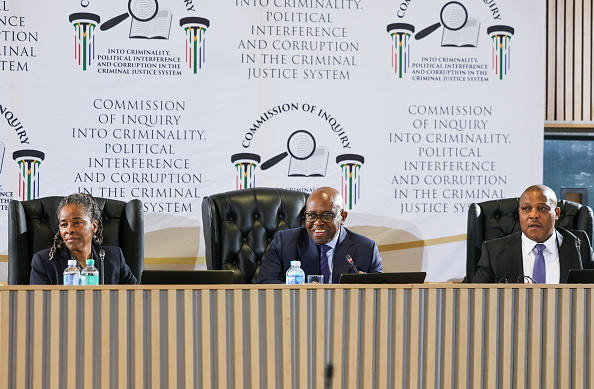
Commissioners of the Madlanga Commission of Inquiry: Adv Sesi Baloyi SC, Justice Mbuyiseli Madlanga (Chairperson) and Adv Sandile Khumalo SC, seated at the Commission.
The Judicial Commission of Inquiry into Criminality, Political Interference, and Corruption in the Criminal Justice System – universally known as the Madlanga Commission – continues its work under the chairmanship of retired Constitutional Court Justice Mbuyiseli Madlanga, assisted by Advocates Sesi Baloyi SC and Sandile Khumalo SC. Established by President Cyril Ramaphosa in July 2025 following serious allegations by the KwaZulu-Natal Provincial Commissioner of Police, the Commission has already sat for more than 180 days and has produced two interim reports. The Commission’s mandate is to examine the veracity, scope and extent of allegations of collusion between elements of the police, prosecution, intelligence services and, in some accounts, the judiciary. Its work is conducted in accordance with the Commissions Act 8 of 1947 and the terms of reference issued by the President. Hearings have been both public and, where necessary for the protection of ongoing investigations or the safety of witnesses, in camera. The Commission has demonstrated procedural fairness, has issued reasoned rulings on applications for postponement and closed sessions, and has maintained a public record of its proceedings.
For judicial officers, the Commission’s work is of direct relevance. It underscores the importance of an independent judiciary that is free from improper influence and that can,
Judicial Officers Alliance of South Africa · Upholding Justice, Promoting Equity, Fostering Unity Page 5
THE BENCH
Official Newsletter of the Judicial Officers Alliance of South Africa
Seventh Edition · October 2026
when required, examine allegations concerning the broader criminal justice system. The Commission’s final report is due on 25 January 2027. Until then, its continued transparent and rigorous examination of the evidence serves the public interest and strengthens, rather than undermines, confidence in the rule of law. JASA expresses its appreciation for the professionalism with which the Commission has conducted its business and for the courage of those who have come forward to give evidence. We trust that the ultimate findings and recommendations will contribute to a more resilient and trustworthy criminal justice system.
Judicial Officers Alliance of South Africa · Upholding Justice, Promoting Equity, Fostering Unity Page 6
THE BENCH
Official Newsletter of the Judicial Officers Alliance of South Africa
Seventh Edition · October 2026
Cybercrime and the Magistrates’ Courts: A Practical Guide
Applying the Cybercrimes Act 19 of 2020
The intersection of technology and the administration of justice.
The Cybercrimes Act 19 of 2020, which came into full operation in stages, creates a comprehensive framework for the investigation and prosecution of offences committed by means of electronic communications or information systems. Magistrates are increasingly required to deal with applications for search warrants, interception directions, and bail matters involving alleged cyber-related offences. Key offences include unlawful access to data or a computer system (section 2), unlawful interception of data (section 3), cyber fraud (section 8), cyber forgery and uttering (section 9), and the distribution of data messages that incite damage to property or violence (section 14). The Act also criminalises the distribution of intimate images without consent (section 16), a provision of particular importance in the context of gender-based violence.
When considering applications under the Act, magistrates must be satisfied that there are reasonable grounds to believe that an offence has been or is being committed, and that the information sought is relevant. The constitutional rights to privacy (section 14) and freedom of expression (section 16) must be carefully balanced against the legitimate interests of investigation. Recent case law continues to emphasise that electronic evidence must be authenticated and that chain-of-custody principles apply with equal force in the digital environment.
Judicial Officers Alliance of South Africa · Upholding Justice, Promoting Equity, Fostering Unity Page 7
THE BENCH
Official Newsletter of the Judicial Officers Alliance of South Africa
Seventh Edition · October 2026
Judicial officers are encouraged to familiarise themselves with the procedural provisions of the Act and with the relevant regulations. Training materials produced by the South African Judicial Education Institute remain an essential resource.
Judicial Officers Alliance of South Africa · Upholding Justice, Promoting Equity, Fostering Unity Page 8
THE BENCH
Official Newsletter of the Judicial Officers Alliance of South Africa
Seventh Edition · October 2026
Animal Welfare and the Judicial Conscience
The Duty of Care Towards Sentient Beings
Mr Neelan Karikan attending to the veterinary care of a Doberman. Animal welfare is an expression of the same values of compassion and responsibility that undergird the administration of justice.
The Animals Protection Act 71 of 1962 and the more recent developments in animal welfare law impose clear duties on owners and on the state. Cruelty to animals is a criminal offence. Magistrates regularly grant orders under the Act and, in appropriate cases, consider the welfare of animals when determining the suitability of persons for certain licences or when dealing with related property matters. The Constitutional Court has recognised that animals are sentient beings worthy of protection. In National Council of Societies for the Prevention of Cruelty to Animals v Openshaw and subsequent decisions, the courts have affirmed that the state has a positive duty to prevent animal cruelty. For judicial officers, this means that applications for the destruction or removal of animals, and criminal matters involving neglect or abuse, must be approached with both legal precision and a proper appreciation of the moral interests at stake. Compassion for animals is not sentimental; it is consistent with a legal culture that values the prevention of unnecessary suffering. The photograph accompanying this article is a reminder that leadership in the judiciary includes modelling care and responsibility in every sphere of life.
Judicial Officers Alliance of South Africa · Upholding Justice, Promoting Equity, Fostering Unity Page 9
THE BENCH
Official Newsletter of the Judicial Officers Alliance of South Africa
Seventh Edition · October 2026
Preventing Unlawful Eviction: The Magistrate’s Role under the PIE Act
Section 26(3) of the Constitution and the Prevention of Illegal Eviction from and Unlawful Occupation of Land Act 19 of 1998
The Prevention of Illegal Eviction from and Unlawful Occupation of Land Act remains the principal statute governing eviction proceedings in the lower courts.
No one may be evicted from their home without an order of court made after considering all the relevant circumstances (section 26(3) of the Constitution). The Prevention of Illegal Eviction from and Unlawful Occupation of Land Act 19 of 1998 (the PIE Act) gives effect to this right. Magistrates are frequently the first judicial officers to consider urgent applications under section 5 of the Act and to determine whether it is just and equitable to grant an eviction order under section 4. The enquiry is not mechanical. The court must consider the rights and needs of the elderly, children, disabled persons and households headed by women; the circumstances under which the unlawful occupier occupied the land; the period of occupation; and the availability of suitable alternative accommodation. Recent decisions of the Supreme Court of Appeal and the Constitutional Court continue to emphasise that municipalities have positive obligations to provide temporary emergency accommodation where an eviction would render persons homeless.
Magistrates should insist on proper service of the section 4(2) notice, should invite municipalities to report on alternative accommodation, and should give reasons that demonstrate that the just-and-equitable enquiry has been fully undertaken. Procedural shortcuts undermine both the Constitution and the dignity of the persons affected.
Judicial Officers Alliance of South Africa · Upholding Justice, Promoting Equity, Fostering Unity Page 10
THE BENCH
Official Newsletter of the Judicial Officers Alliance of South Africa
Seventh Edition · October 2026
Children’s Rights of Access: Balancing Contact and Protection
The Children’s Act 38 of 2005 and the Best Interests Standard
The best interests of the child remain paramount in every matter concerning contact and care.
Section 28(2) of the Constitution provides that a child’s best interests are of paramount importance in every matter concerning the child. The Children’s Act 38 of 2005 operationalises this principle. Magistrates sitting in the children’s courts and in maintenance and domestic violence matters regularly make orders regulating contact (access) between a child and a parent or other person. When determining contact, the court must consider the factors listed in section 7 of the Act, including the nature of the personal relationship between the child and the parent, the capacity of the parent to meet the child’s needs, the likely effect of any change, and any family violence. Where there are allegations of domestic violence or child abuse, contact may be supervised or suspended pending investigation. The child’s views, having regard to the child’s age, maturity and stage of development, must be given due consideration (section 10). Orders should be clear, specific as to times and places, and accompanied by mechanisms for enforcement. Where appropriate, the court may appoint a family advocate or a suitably qualified professional to investigate and report. The overriding objective remains the protection of the child while preserving, wherever possible, meaningful relationships with both parents.
Judicial Officers Alliance of South Africa · Upholding Justice, Promoting Equity, Fostering Unity Page 11
THE BENCH
Official Newsletter of the Judicial Officers Alliance of South Africa
Seventh Edition · October 2026
The Domestic Violence Act: Recent Amendments and Practical Application
Strengthening Protection for Victims
The Domestic Violence Act, as amended, remains a critical instrument for the protection of victims of domestic abuse.
The Domestic Violence Act 116 of 1998, substantially amended by the Domestic Violence Amendment Act 14 of 2021, provides for the issuing of protection orders on an urgent basis. Magistrates may grant interim protection orders without notice to the respondent where there is a risk of imminent harm. Final orders are made after a hearing. The amended Act expands the definition of domestic violence to include controlling behaviour, economic abuse, and the distribution of intimate images. It also strengthens the obligations of the South African Police Service to assist complainants and to seize firearms. Failure by a police officer to comply with the Act may itself constitute an offence. When considering applications, magistrates must apply the civil standard of proof on a balance of probabilities for the final order, while remaining alive to the dynamics of coercive control. Reasons should address the nature of the relationship, the history of abuse, and the specific prohibitions necessary to secure the complainant’s safety. Breach of a protection order is a criminal offence and must be dealt with firmly.
Judicial Officers Alliance of South Africa · Upholding Justice, Promoting Equity, Fostering Unity Page 12
THE BENCH
Official Newsletter of the Judicial Officers Alliance of South Africa
Seventh Edition · October 2026
Gender-Based Violence and Femicide: Recent Developments and the Judicial Response
A National Crisis Requiring Sustained Judicial Attention
Public demonstrations continue to call for an end to the killing of women in South Africa.
South Africa continues to experience unacceptably high levels of gender-based violence and femicide. Recent statistical releases by the South African Police Service and research by civil society organisations confirm that women and girls remain at grave risk in both public and private spaces. The judiciary has a central role in ensuring that the criminal justice response is swift, sensitive and effective. Legislative developments include the strengthened Domestic Violence Act, the Criminal Law (Sexual Offences and Related Matters) Amendment Act, and the ongoing implementation of the National Strategic Plan on Gender-Based Violence and Femicide. Specialised sexual offences courts and the increased use of intermediary facilities have improved the experience of child and vulnerable adult witnesses. Sentencing jurisprudence continues to emphasise that gender-based violence is an aggravating factor and that lengthy terms of imprisonment are appropriate in serious cases. Magistrates are urged to ensure that protection orders are granted without unnecessary delay, that bail applications in GBV matters are rigorously scrutinised, and that victims are treated with dignity at every stage of the proceedings. The recent killings of women have again focused national attention on the need for a coordinated response. Judicial officers form an indispensable part of that response.
Judicial Officers Alliance of South Africa · Upholding Justice, Promoting Equity, Fostering Unity Page 13
THE BENCH
Official Newsletter of the Judicial Officers Alliance of South Africa
Seventh Edition · October 2026
The 2026 Local Government Elections and the Role of the Courts
Safeguarding the Integrity of the Electoral Process
Free and fair elections under the protection of the law.
South Africa’s local government elections are scheduled for 4 November 2026. The Electoral Act 73 of 1998, as amended, and the Municipal Electoral Act 27 of 2000 regulate the process. Magistrates’ courts have jurisdiction over certain electoral offences and may be called upon to deal with urgent applications concerning the conduct of the elections, the validity of nominations, or the counting of votes. Judicial officers must remain scrupulously impartial. Any appearance of political alignment undermines public confidence. When applications are brought, the court should prioritise speed consistent with fairness, given the compressed timelines of an election period. The Constitutional Court’s jurisprudence on free and fair elections (section 19 of the Constitution) remains the guiding framework. JASA encourages all judicial officers to familiarise themselves with the relevant electoral legislation and with the protocols issued by the Electoral Commission. Our collective responsibility is to ensure that the elections are conducted in an atmosphere of peace, legality and public trust.
Judicial Officers Alliance of South Africa · Upholding Justice, Promoting Equity, Fostering Unity Page 14
THE BENCH
Official Newsletter of the Judicial Officers Alliance of South Africa
Seventh Edition · October 2026
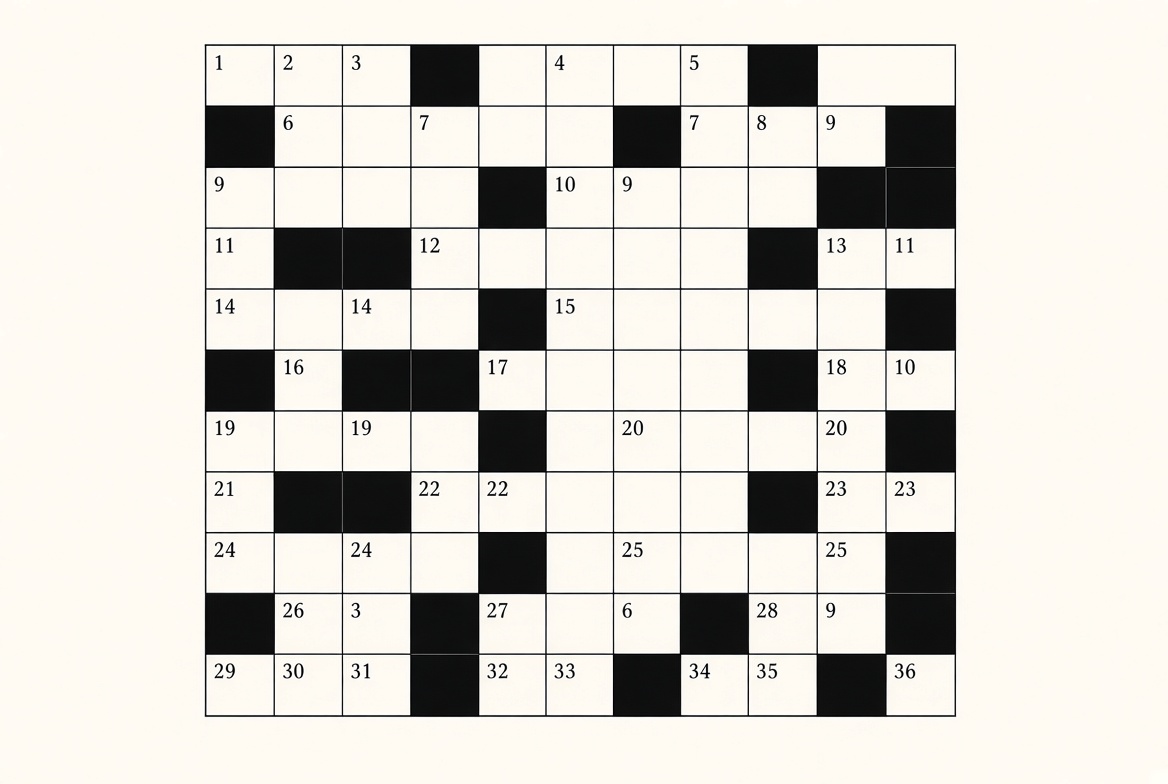
The Bench Crossword: Nobel Peace Prize & Justice
A light puzzle in honour of Judge Navi Pillay and the ideals of international justice
Complete the grid using the clues below. Answers will appear in the next edition.
Across
1. The city of Judge Pillay’s birth (6) 4. The international court on which she has served as an ad hoc judge (3) 6. The Rwandan tribunal she once presided over (4) 8. The prize awarded to her in October 2026 (5) 10. The principle she has championed throughout her career (4 of law)
Down
2. The province in which she opened her first law practice (5) 3. The island on which she secured rights for political prisoners (6) 5. The UN office she headed from 2008 to 2014 (Human Rights Commissioner) 7. The crime whose definition as genocide she helped establish (4) 9. The year she became the first non-white woman High Court judge (4)
Answers will appear in the next edition. We invite colleagues to submit completed puzzles to the JASA secretariat.
Judicial Officers Alliance of South Africa · Upholding Justice, Promoting Equity, Fostering Unity Page 15
THE BENCH
Official Newsletter of the Judicial Officers Alliance of South Africa
Seventh Edition · October 2026
A Light Moment from the Bench
Comic Strip
Sometimes the simplest explanation is the right one.
Panel 1 – Both counsel insist the file belongs to their matter. Panel 2 – The mystery is solved: two files, one paperclip. Panel 3 – A moment of shared embarrassment. Panel 4 – The magistrate suggests they share the costs of the paperclip.
Judicial Officers Alliance of South Africa · Upholding Justice, Promoting Equity, Fostering Unity Page 16
THE BENCH
Official Newsletter of the Judicial Officers Alliance of South Africa
Seventh Edition · October 2026
References, Footnotes and Selected Case Law
Statutes
• Constitution of the Republic of South Africa, 1996 • Cybercrimes Act 19 of 2020 • Prevention of Illegal Eviction from and Unlawful Occupation of Land Act 19 of 1998 • Children’s Act 38 of 2005 • Domestic Violence Act 116 of 1998 (as amended by Act 14 of 2021) • Animals Protection Act 71 of 1962 • Electoral Act 73 of 1998 • Municipal Electoral Act 27 of 2000 • Commissions Act 8 of 1947
Selected Case Law
• Port Elizabeth Municipality v Various Occupiers 2005 (1) SA 217 (CC) (PIE Act, just and equitable enquiry) • City of Johannesburg Metropolitan Municipality v Blue Moonlight Properties 39 (Pty) Ltd 2012 (2) SA 104 (CC) (municipal obligations in eviction) • S v M 2008 (3) SA 232 (CC) (best interests of the child) • National Society for the Prevention of Cruelty to Animals v Minister of Justice and Constitutional Development 2017 (1) SACR 284 (CC) (animal welfare) • Relevant Cybercrimes Act jurisprudence continues to develop; magistrates are referred to the latest SAFLII reports.
Other Sources
• Norwegian Nobel Committee, Citation for the 2026 Peace Prize (9 October 2026) • Madlanga Commission of Inquiry, public statements and interim reports (2025–2026) • South African Judicial Education Institute training materials • Department of Justice and Constitutional Development, Magistrates Commission shortlists (August 2026)
© 2026 Judicial Officers Alliance of South Africa. All rights reserved. This newsletter is intended for professional colleagues and may be shared within the judiciary.
Judicial Officers Alliance of South Africa · Upholding Justice, Promoting Equity, Fostering Unity Page 17