
The Department of Correctional Services administers the sentence. The court determines its legal content. Sentence remarks, conditions and recommendations are the Department’s first working document. If those remarks are silent, case management proceeds from the charge sheet and the warrant only.
Restorative justice is not a substitute for a lawful sentence. It is a process that may be used alongside one. A court that records prior programme attendance, considers whether a victim-offender process is competent and safe, and writes reasons a case-management committee can apply, has supplied the Department with usable material.
Section 276 of the Criminal Procedure Act is not limited to direct imprisonment. Correctional supervision, a suspended sentence with enforceable conditions, and a recommendation that specified programmes be made available are available options. They do not reduce the seriousness of the offence. They determine how the term is to be administered.
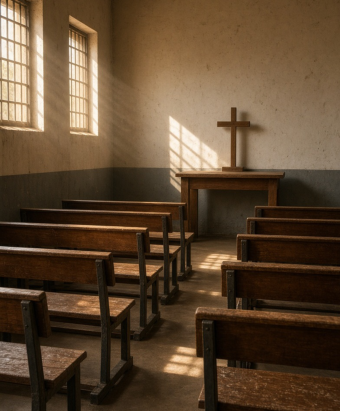
A spiritual-care facility inside a correctional centre. Programme attendance forms part of sentence administration.
A working method for the sentencing court
Record the facts that later officials will need: prior convictions, current programmes, employment history, dependants, and any assessed risk already on the file.
If remorse or programme participation is accepted, say so in the reasons. Parole boards and case-management committees work from what the court wrote, not from what was said in passing.
Where the law allows, attach conditions that can be monitored: a named programme, a reporting duty, community service with a specified placement, or a victim-offender process only where the victim has consented and the facility can supervise it.
Do not treat uncharged allegations as proved for the purpose of sentence. A correctional file built on untested allegations cannot support lawful case management.
Record the complainant’s position. A restorative condition imposed without the complainant’s consent, or without a means of supervision, should not be attached.
About the author
Reverend Michael Pillay is a Durban pastor and spiritual-care worker. His correctional ministry began at Durban Westville in October 1989 and continued for nearly four decades, covering male and female inmates under successive chaplains and Area Commissioners. Programme work included The Transformed Life and Heartlines’ Nothing for Mahala, with individual counselling as the ordinary method.
He has served congregations at Mount Sinai Church in Phoenix and Newlands West since 1984 and has coordinated community work through the Life Together Resource Centre. He holds a diploma in theology and is a marriage officer. He has published on the theology of suffering as it presents in correctional pastoral care.
A function at Jireh Assembly Ministries in Phoenix in 2026 marked the end of that correctional appointment. The duty to provide correction, development and care remains with the Department. The court remains responsible for writing a sentence the Department can administer.
Prepared for the Heritage Day edition of The Bench. It is not a practice directive of JASA, the Magistrates Commission, the OCJ or any court. It is a working note on rehabilitation after sentence.