
Language, custom, the interpreter — strengthening the ties that bind the roll
Section 6 of the Constitution names eleven official languages and obliges the State to take practical and positive measures to elevate the status of the historically diminished ones. Section 35(3)(k) gives every accused the right to be tried in a language that the accused understands, or, if that is not practicable, to have the proceedings interpreted. That is not decoration for Heritage Month. It is the daily condition of a fair trial in a district court. An interpreter who arrives late, or who summarises instead of rendering, is not a scheduling inconvenience. It is a section 35 problem. Write the language on the record. If the interpretation was incomplete, say so. A conviction built on a half-heard plea is a gift to the appeal court and an injury to the person in the dock.
Customary law is not folklore
Section 211 of the Constitution recognises customary law, subject to the Constitution and any legislation that specifically deals with it. Recognition of Customary Marriages Act 120 of 1998, Reform of Customary Law of Succession Act 11 of 2009, and the living law as proved in the room still arrive on the civil and children's-court blotter. The point is not to romanticise. It is to hear the actual practice of the family before the court, and then to measure it against dignity, equality and the best interests of the child. Lobolo, ukuthwala as it is sometimes pleaded, and the status of a customary marriage that was never registered are not Heritage Day talking points. They are jurisdictional and proprietary questions. Ask what was done, who witnessed it, and what the living custom of that community now is — not what a textbook said in 1988.
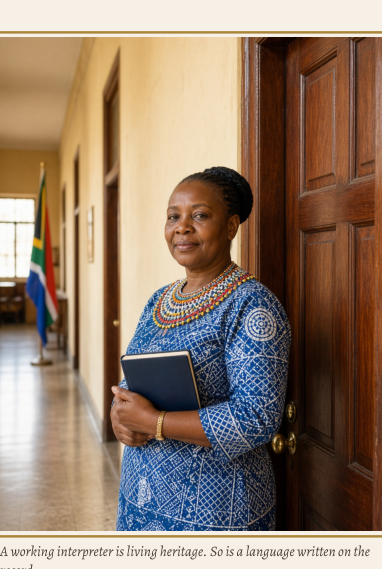
A working interpreter is living heritage. So is a language written on the record.
A working method
• Record the language of the accused, the complainant and the child. If you used an interpreter, name the language pair.
• Do not treat a customary claim as colour for a common-law finding. Prove it, or say that it was not proved.
• Mentorship still includes walking a junior through a customary-marriage dispute before it becomes a rumour.
• Security remains a section 165 question. A magnetometer that does not work is how independence dies in a building that still has a crest on the wall.
On Heritage Day the language question is not theoretical. A person will arrive who does not use the language of the record. Call the interpreter before the plea, not after the conviction. That is new work every Monday. It does not need last month's interview list to make it urgent.
the plea, not after the conviction. That is new work every Monday.
A note from Neelan Karikan. Authority stems from action. Greet the colleague who is still carrying the court.
The building understands a senior who opens a door — and a court that can hear a person in the language they actually speak.